A First Watch for Gesture: An At-Home Viewing Exercise
A first watch for gesture helps you notice how posture, hands and pauses shape a scene, using an ordinary screen, a few prompts and no film-study jargon.
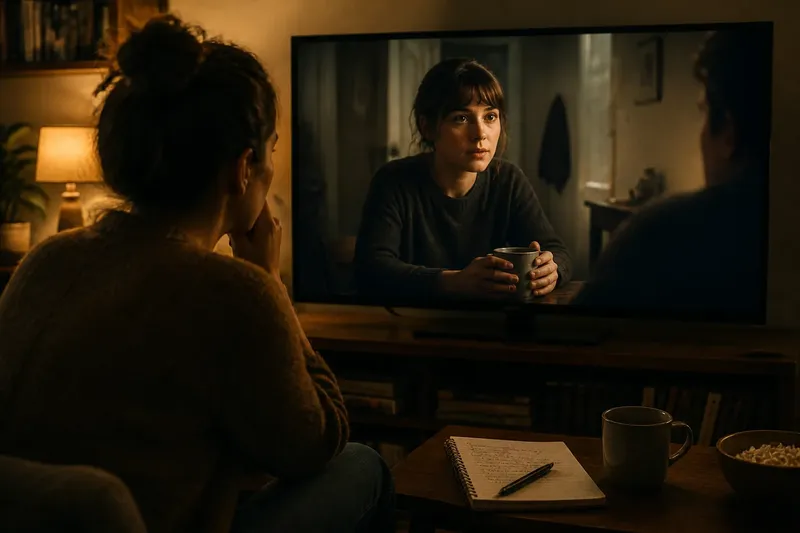
You press play after dinner, intending to watch a quiet conversation, then realise you have been following the dialogue and missing what the actors do with their hands. A first watch for gesture gives you a simple way to return to that scene: choose one performer, watch once without taking notes, then revisit a short stretch with a few focused questions. You need only a screen, a pause button and an ordinary amount of curiosity.
This is not a test of whether an actor is “good”. It is a viewing exercise in noticing choices: a shoulder held still, fingers busy at the edge of a frame, or a pause that changes how a line lands. If something seems unclear, the difficulty may come from the scene’s staging, editing or your own attention rather than from a hidden meaning you have failed to decode.
Set a small target
Pick one scene that is short enough to revisit without turning the evening into homework. A conversation, a meeting at a doorway or a character waiting for a reply can all work. Choose one performer to follow, even if other people share the frame. The aim is to trace that person’s physical behaviour, not to catalogue every detail in the scene.
On the first pass, watch normally. Let the plot and dialogue come through. When the scene ends, ask yourself what you remember about the performer’s body. You might recall that they leaned towards someone, kept a hand in a pocket or seemed to wait before answering. Those impressions are enough; do not try to make them precise yet.
If you cannot remember much, that is a useful signal, not a failure. On the next pass, direct your attention to one area at a time: posture first, hands later, pauses after that. Keeping the target small makes the exercise easier and helps prevent a common trap: trying to read every gesture as a clue.
Choose a scene with a clear exchange and a visible performer, rather than a crowded sequence where the camera constantly changes focus.
When dialogue takes over
Problem: You follow the words and lose sight of the performer’s movement. This often happens because dialogue naturally pulls attention towards what is being said, especially when the scene contains unfamiliar names, a complicated argument or a plot detail you are trying to retain.
Try: Replay the scene with the sound on, but choose one simple physical question before pressing play: does the performer stay still, or shift position? You do not need to answer why. Just notice the movement, and then see whether it occurs while the performer speaks, while someone else speaks, or between lines.
If the words remain distracting, use a brief stretch you already understand rather than replaying the whole scene. Avoid trying to follow several performers at once. One person and one question are enough for this pass.
When posture feels vague
Problem: You can tell that a performer’s posture matters, but “tense” or “relaxed” feels too broad to be useful. Those labels can flatten several different choices into one impression. A person may hold their torso rigid while their head turns readily, or sit comfortably but keep their shoulders raised.
Try: Describe what you can see before naming an emotion. Is the performer leaning forward, folding inwards, standing squarely, turning away, or changing their height in relation to another person? Note when the posture changes and what happens immediately around it: a question, a movement by a scene partner, or a silence.
Then consider what the posture lets the performer do. A forward lean may bring them closer to the other person; a turned shoulder may limit eye contact. These are observable effects, not proof of a single inner feeling. The scene may leave room for more than one interpretation.
Try replacing “they look nervous” with a description such as “their shoulders remain raised while the other person speaks”.
When hands disappear
Problem: You want to watch the hands, but they are hidden behind a table, outside the frame or obscured by another performer. That may be a choice of staging or camera placement, but it does not make the exercise unusable. A visible absence can also tell you where the scene directs attention.
Try: Follow what is available. Notice whether a hand enters or leaves the frame, whether the performer holds an object, or whether their arms remain close to the body. If the hands are out of view for most of the scene, shift to the shoulders or the way the performer occupies the chair or doorway.
Do not infer a specific gesture from a cut that hides it. Instead, mark the boundary of what you can see: the performer reaches down, the shot changes, and the next view shows them holding a cup. The edit may connect those moments, but your viewing notes should distinguish visible action from an assumption about what happened between shots.
When pauses are hard to spot
Problem: The conversation feels continuous, so you cannot tell where a pause begins or what it does. The cause may be quick dialogue, overlapping speech or a cut that shortens the moment. A pause need not be a long silence; it can be a small delay before a reply or a held expression after a line.
Try: Listen for the gap between one person finishing and the other responding. Watch the chosen performer through that gap: do they look away, keep still, inhale, move a hand or appear ready to speak? Then watch the same moment again with attention on the other person. The pause may belong to the exchange rather than to one performer alone.
Say you choose an invented scene in which a guest asks whether they may stay the night. The host looks towards the hallway, presses a thumb against the edge of a mug, then answers after a short silence. On a first pass, you might simply notice that the answer is delayed; on a replay, the glance and hand movement become part of the hesitation, without proving exactly what the host feels.
When the camera interrupts
Problem: The scene cuts away just as you begin watching a movement. Editing can redirect attention from a face to a listener, an object or a different part of the room. That shift is part of the scene’s construction, so do not treat every cut as an obstacle to get around.
Try: Notice what the cut leaves you looking at. Does it show the listener’s response while the performer speaks, or return to the performer after a pause? Compare the visible action before and after the cut, and keep your description modest where the film withholds information.
For a quick practice pass, you can make a few plain notes on paper or in a phone’s notes app:
- Who is the one performer you are following?
- What posture is visible at the start of the scene?
- When do the hands enter, leave or remain outside the frame?
- What changes during another person’s line?
- Where does a pause occur, and what can you observe during it?
- What does the camera show or conceal at the moment of change?
Keep each note descriptive. “Looks away before answering” gives you something to revisit; “does not trust the other person” is an interpretation. You can make that interpretation later, but first separate it from the action you actually saw.
What should I watch first?
Should I turn the sound off?
Start with sound on, so the scene’s timing and exchanges remain clear. If dialogue keeps pulling your attention away, replay a short stretch and focus on one physical detail rather than removing the sound entirely.
Do I need to know acting terms?
No. Everyday descriptions such as “turns away”, “holds the mug” or “waits before speaking” are more useful here than technical vocabulary you do not need. The exercise is about careful looking, not naming a professional method.
What if I notice nothing?
Shorten the scene and ask one concrete question, such as whether the performer changes position after a line. A small observation counts; you can always replay the moment once rather than searching for a dramatic gesture.
How do I avoid guessing at feelings?
Write down the visible action first, then treat any emotional reading as a possibility rather than a fact. A turned head or a restless hand can support several interpretations, depending on the surrounding scene.
Let the second watch differ
After a focused replay, watch the scene once more at its ordinary pace. Notice whether the gesture you tracked changes your understanding of the exchange, or simply gives the scene a more specific rhythm. Either result is useful. A performer’s posture, hands and pauses can add emphasis, hesitation or contrast, but none has to carry a secret message.
A first watch for gesture works best as a gentle adjustment to attention, not a hunt for symbolism. If you return to another scene later, choose a different performer or physical detail instead of repeating the same questions. Keep the notes brief, stay close to what is visible, and let the scene remain more complicated than any single gesture.
When you next watch a quiet exchange, give one moment your full attention: the movement before a reply may be as revealing as the reply itself.