Room Tone or Music: What Holds a Quiet Scene?
Room tone or music can hold a quiet scene in different ways; learn how each directs attention and changes the feeling of a moment.
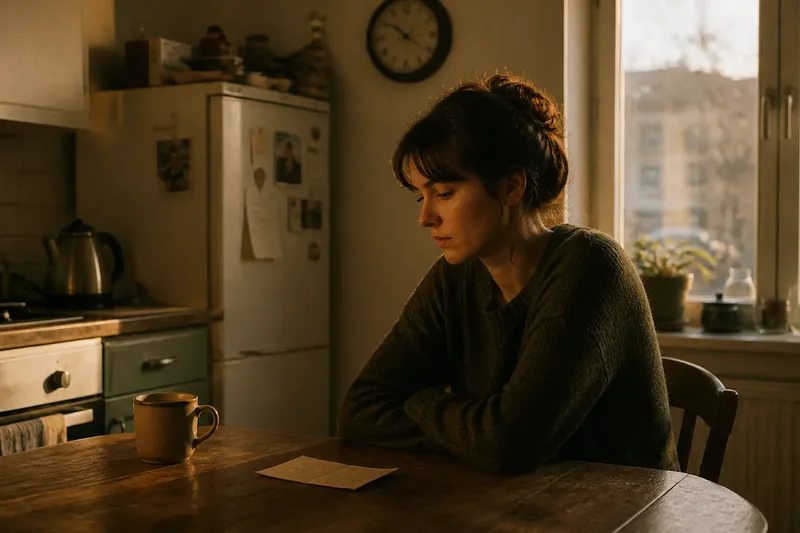
A kettle clicks off in an empty kitchen, and someone keeps staring at the table. In a quiet scene, room tone or music can hold that pause, but each asks the viewer to listen for something different. Room tone keeps attention close to the space and its small sounds; a score can give the pause a more shaped emotional direction.
A pause in the kitchen
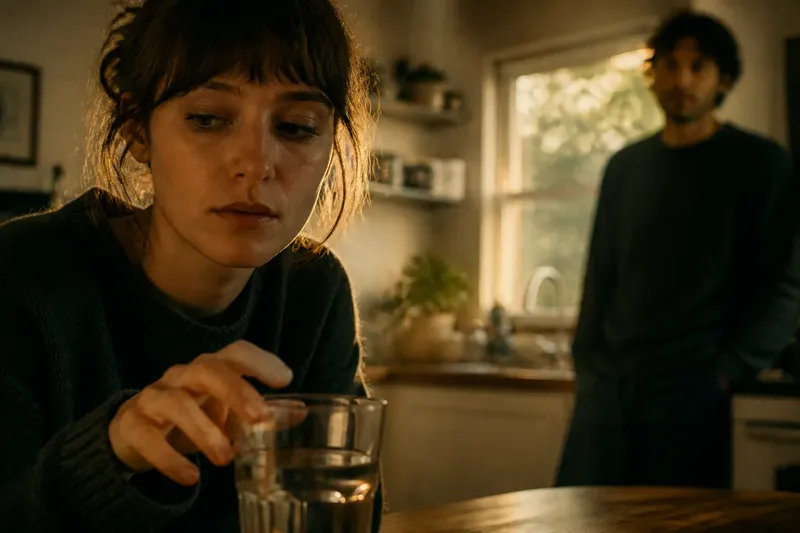
Say a filmmaker is building an invented, hypothetical scene: Mara has just read a note from her brother, then sits alone in a rented kitchen. The note is out of frame. She does not cry or reach for the telephone. The scene needs to sustain her hesitation without explaining what she feels.
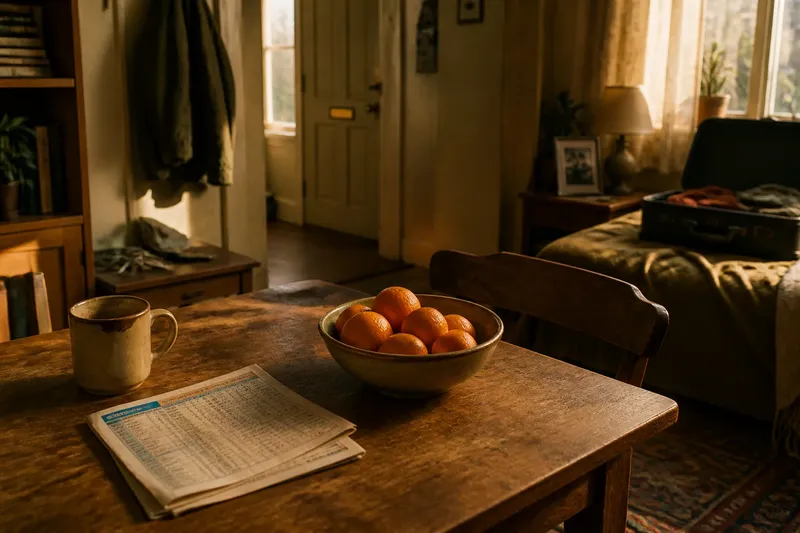
The starting point is the same for both sound approaches. There is a refrigerator hum, a clock ticking, and faint traffic beyond the window. Mara’s chair shifts once as she settles. These sounds belong to the imagined room, even if the production later records or creates them separately. Together, they make up its audible environment.
Room tone has a precise meaning in sound work: it is the underlying sound of a space when no one is speaking or making a prominent action sound. It need not be silence, and it is not always a literal recording of an empty room. A designed ambience can preserve a sense of continuity and place while dialogue pauses.
For this scene, the filmmaker could keep the refrigerator and distant traffic audible, with the clock present but not conspicuously sharp. The expected observable result is that the kitchen continues to feel occupied by ordinary life while Mara remains still. The viewer may start noticing how long the pause lasts, or how small her movement sounds against that steady bed.
Try listening for what the room lets you notice before deciding what the character feels.
What room tone directs
Ambient sound is not emotionally neutral simply because it comes from a location. A low electrical hum can make a room feel enclosed; traffic can suggest a world continuing beyond it. A ticking clock may make waiting noticeable, but if it is too prominent, it can begin to feel like a deliberate signal rather than part of the kitchen.
That distinction depends on emphasis. The sound editor can keep an ambience even, let one element come forward, or allow a sound to disappear. If the refrigerator hum continues unchanged through Mara’s pause, attention may settle on duration and stillness. If the hum stops at the moment she looks up, the change may feel loaded, even if no one explains it.
Room tone also gives silence texture. A scene with no audible bed can feel abstract, as if the viewer has been lifted out of the room. That may be a deliberate effect, but it is different from hearing a quiet place. Even a very restrained ambience can preserve the impression that air, walls and distant activity continue around the character.
For the imagined kitchen, the choice is not simply whether to include sound. It is which part of the setting deserves the viewer’s attention, and whether that attention should remain steady or shift.
What music directs
Now imagine the same scene with the ambient bed softened and a sparse musical phrase introduced as Mara unfolds the note. A few sustained notes might gather around her stillness. The expected result is not a specific emotion but a more clearly composed pause: the audience is invited to attend to the moment as significant, rather than mainly to the kitchen around it.
Music can add continuity across changes in image or sound. A held note may carry through a cut, while the room’s ambience changes with the next shot. A score can also make a private moment feel broader, as if it reaches beyond the immediate space. Those qualities can be useful when the film wants to guide attention towards an emotional arc rather than the material details of the room.
But a score can also make the scene less open. If the phrase swells as Mara looks down, viewers may read the gesture as grief or regret before they have enough context. That direction might suit the story; it might also narrow a pause that was meant to hold uncertainty. Music does not merely fill quiet. Its entrance, pitch, rhythm and phrasing shape how the quiet is interpreted.
In this invented scene, the filmmaker could instead wait until Mara folds the note before adding music. The delayed entrance would leave her first silence attached to the kitchen, then mark the later action as a change in the scene’s emotional emphasis.
Choosing the sound
The useful question is not which option is more dramatic. It is what the scene needs the viewer to attend to, and how much interpretation the sound should supply. Room tone is often the stronger choice when a pause should remain tied to a particular place or when small physical actions matter. Music may suit a pause whose importance extends beyond its immediate setting, or whose emotional movement needs a clear contour.
A hybrid can make that movement audible without turning it into an either-or decision. The refrigerator, traffic and chair remain in the mix while a restrained score enters late. Keeping some ambience under the music can preserve the kitchen as a physical place; thinning the ambience can make the score feel as though it is taking over the viewer’s attention.
Imagine Mara folds the note, stands, then leaves the kitchen. If the scene continues with room tone alone, the expected result is a quiet departure grounded in the ordinary space. If a musical phrase begins as she stands, the expected result is a transition that gives the action greater emotional weight. Either version can work; the sound’s timing makes the difference legible.
When watching, listen for the moment a sound begins, grows, recedes or stops. That change can reveal the scene’s point of attention more clearly than the sound’s label.
Questions about quiet scenes?
Is room tone the same as silence?
No. Room tone is the low-level sound associated with a space, while silence means that little or no sound is audible. A film may also reduce ambience deliberately, creating a silence that feels distinct from an ordinary room.
Can a quiet scene use both ambience and music?
Yes. The balance and timing determine whether the room remains prominent or the score takes the lead. A score can sit beneath environmental sound, enter after a pause, or gradually make the ambience less noticeable.
Why does a clock sometimes sound unusually loud?
A clock may be raised in the mix so the viewer notices waiting, repetition or the passage of a pause. If it feels conspicuous, that prominence is likely doing expressive work rather than simply reproducing the room’s natural balance.
How can I tell what the sound is asking me to notice?
Notice whether your attention settles on the character’s movement, the surrounding place, or an emotional shift suggested by the score. Then listen for what changes when the sound changes. In a quiet scene, those choices often reveal what the image leaves unsaid.
Listen for the shift
Room tone or music can both sustain a quiet scene, but they hold it by different means: one keeps the viewer near the room’s audible details, while the other shapes the pause as part of an emotional pattern. In the kitchen scene, the filmmaker’s choice turns on whether Mara’s hesitation should feel rooted in her surroundings or gently guided towards a larger feeling.
On a first watch, let the scene play without trying to name every sound. On a second, notice when the ambience or score changes and what your attention does next. That small shift is often where the sound design quietly tells you how to watch.