Why a Close-Up Can Change a Scene’s Temperature
A close-up changes a scene’s temperature by altering access to expression and gesture; learn how camera distance guides attention without dictating intimacy.
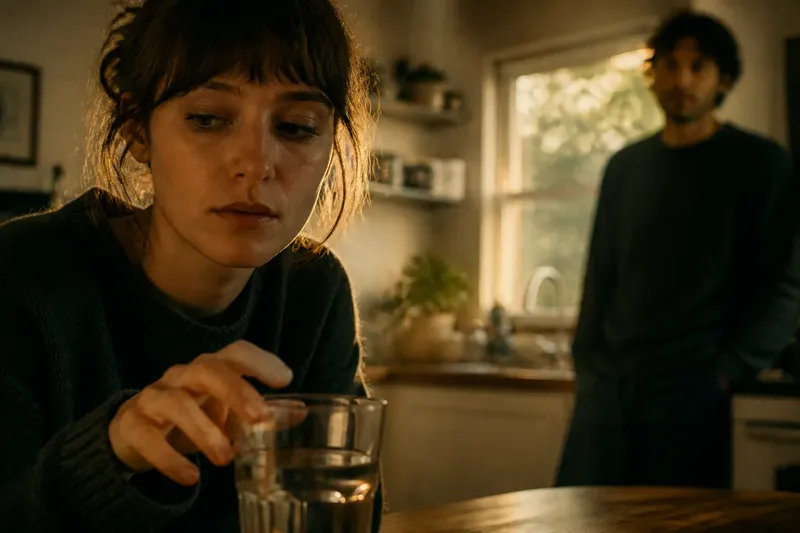
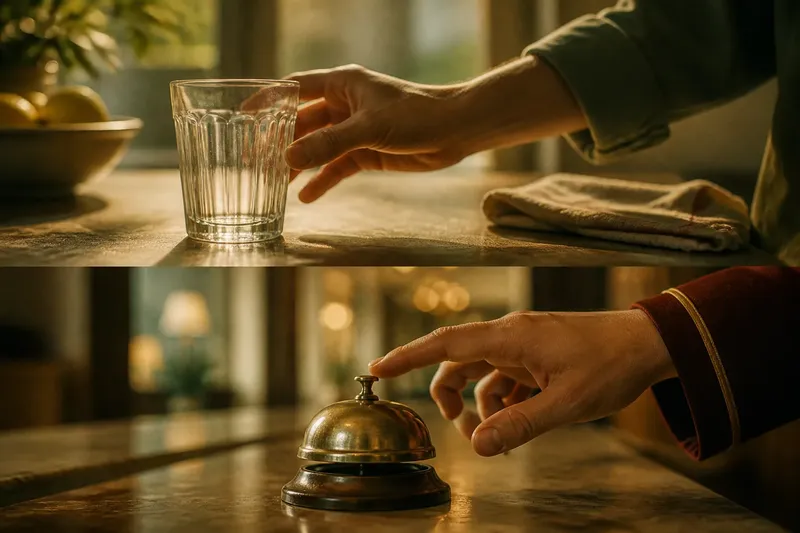
A character reaches for a glass, pauses, then draws their hand back. From across the room, the hesitation is one detail among several; in a close-up, it can become the scene’s main event. A close-up changes a scene’s temperature by changing how much of a face or gesture the viewer can read, not by automatically making the moment intimate.
Camera distance is a relationship between the viewer and the visible action. Move closer, and small movements take up more of the frame. Stay farther away, and a character remains part of a larger arrangement: another person, a doorway, a table, or the space between bodies may carry equal weight. Neither position has a fixed emotional meaning. Its effect depends on what the framing lets us notice and what it keeps in view.
Distance as access
Film-makers often describe framing by shot size. A wide shot shows a person with substantial surrounding space; a medium shot holds more of the body and its immediate setting; a close-up concentrates on a face or another detail. These terms are useful shorthand, not rigid measurements. The same shot may feel closer or more remote depending on lens choice, camera position, movement, and what fills the frame.
Distance changes access in two connected ways. First, it alters the scale of visible information. At close range, a tightening jaw or a brief glance can be legible. At a greater distance, that detail may disappear, while posture, movement across the room, or a character’s relation to the setting becomes easier to see. Second, distance changes the viewer’s sense of participation. A close view can feel attentive, exposing, intrusive, or simply practical. The scene’s other elements help decide which.
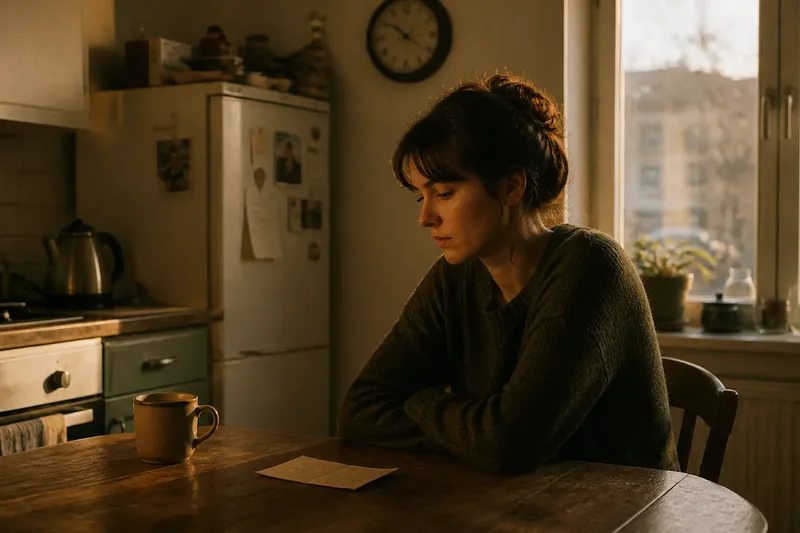
Consider a conversation in a kitchen. A medium view might show both speakers and the counter between them. A close-up of one speaker may make a swallowed reply more noticeable, but it also leaves the other person’s reaction outside the frame. A close-up of the listener would shift access again: the same spoken line now belongs to the listener’s visible response as much as to the speaker’s words.
The useful question is not, “Does this close-up mean intimacy?” It is, “What can I read from this distance, and what has the frame stopped showing me?”
Reading a close-up
A close-up gives a gesture room to register. An eye moving towards a door, fingers flattening against a table, or a smile that does not reach the eyes can become prominent because the surrounding image offers fewer competing details. That prominence is not the same as certainty. A visible expression may be difficult to interpret, and a film can use that uncertainty deliberately.
Close framing can also expose how hard it is to read another person. A face fills the screen, but the character may look away, remain still, or conceal a response. The viewer has access to more surface detail without gaining direct access to someone’s thoughts. In that case, closeness intensifies observation while withholding explanation. The scene may feel tense or uncomfortable rather than tender.
Distance also changes the meaning of a gesture by changing its neighbours. A hand trembling beside a second character’s steady hand invites a comparison. The same trembling hand, isolated in a close-up, draws attention to itself. In a wider frame, it might be one small movement within an uneasy room. The gesture has not changed; the visual context around it has.
When watching, notice whether the close-up includes a shoulder, a hand, or a sliver of the setting. Those edges matter. A face framed beside a dark doorway retains a relation to that doorway; a face filling nearly the whole image gives the setting little room to compete.
What does a close-up reveal?
Does a close-up always signal intimacy?
No. It may suggest scrutiny, pressure, isolation, or a practical need to make a reaction visible. Look at the character’s expression, the surrounding scene, and what the framing excludes before assigning it a feeling.
Why might a face look distant when it fills the screen?
A large image of a face can make a character seem hard to reach if their expression is closed or their gaze avoids the other person. The frame grants visual access to the face, but that does not make the character emotionally open.
What changes when the camera pulls back?
More of the body and setting become available, so a viewer can weigh expression against posture, space, and other people’s reactions. A pullback can make a private moment feel exposed, or show that an apparent personal crisis is part of a larger situation.
Can a close-up make a small action feel important?
Yes, because the action occupies more of the visible image and competes with fewer details. Its importance still depends on context: the scene may invite attention to the action, or make the viewer wonder why the camera has singled it out.
What the frame excludes
Every shot includes some information and removes the rest. A close-up may leave out the other person’s face, the exit, or the object that explains a gesture. That omission can shape the scene as strongly as the visible expression. If the viewer cannot see who is listening, for example, a character’s words may feel less like an exchange and more like a private admission.
This does not mean the omitted information is always a secret. It may simply belong to another shot, or the director may want the viewer to stay with one person for a moment. But when a film delays a wider view, the viewer has to interpret the close-up without the full physical situation. A later change in distance can revise that interpretation by revealing who else was present or what the character was looking towards.
Imagine a fictional scene in which Mara waits at a station bench while her brother stands nearby. A close-up on Mara’s fingers as they fold a paper ticket could make the slight crease the viewer’s focus, while leaving her brother’s face unseen. If the frame then widens to show him watching her in silence, the gesture may read as something shared between them rather than a private sign of nerves. The change comes from newly visible context, not from a different ticket or a newly performed action.
For a useful viewing note, record what disappears when the camera moves closer. That simple observation often reveals whether the scene is narrowing attention to one person or withholding a relationship.
Changes in distance
A scene can shift distance through a cut, a camera move, or the actors’ movement within a fixed frame. Each route feels different because each changes the viewer’s access differently. A cut to a close-up arrives as a deliberate new view. A slow move towards a face lets the viewer experience the narrowing gradually. If a character walks towards a stationary camera, the frame may become more intimate in scale while also showing the character’s own approach.
These differences affect how a change feels. A sudden close-up can interrupt a composed view and make a reaction demand attention. A slow push-in can make the viewer linger with a developing response, though the scene may still feel clinical or uneasy. When a character enters a close framing through their own movement, the viewer may register their choice to approach, retreat, or remain in place.
Films also use distance in patterns rather than isolated moments. A scene might begin with both characters visible, move close to one during a difficult exchange, then return to a wider view after the answer. The return does not necessarily restore comfort. It may reveal the space between them, show that neither has moved, or let a small reaction sit within the room again.
Watch the transitions as well as the resulting shot. Ask whether the camera changes distance before a gesture, in response to it, or after it has passed. That timing can make the close-up feel like anticipation, attention, or delayed recognition.
Why does distance matter?
How can a wider shot feel more personal?
A wider shot can preserve the details that define a relationship, such as one person waiting while another keeps working. Seeing both actions together may communicate their connection more clearly than either face alone.
What is the difference between a close-up and an extreme close-up?
A close-up commonly centres a face or a prominent object, while an extreme close-up isolates a smaller detail such as an eye, fingertip, or key. The boundary is flexible; the practical distinction is how much surrounding context remains visible.
Can camera distance change without a cut?
Yes. The camera can move closer or farther away, or a character can move towards or away from it. Either change alters the scale of the visible action, although camera movement and actor movement can suggest different kinds of attention.
Using distance as a clue
When a close-up appears, begin with visible facts. Which part of the face or body is clear? Can you see another character’s reaction? Is the setting still present at the edge of the frame? Then consider what the shot asks you to attend to, without treating that invitation as a final explanation.
Next, compare the close view with the shot before and after it. A close-up may sharpen an expression, but its placement tells you whether the film is guiding attention towards a reaction, separating someone from the group, or delaying a fuller view. If the camera pulls back, notice what new relationships become readable.
Thinking about camera distance this way makes the close-up more than a shorthand for closeness. It becomes a choice about access: which gestures can be read, whose response is visible, and how much of the surrounding situation remains available. That is why the same close-up can warm a scene, make it feel exposed, or leave its central emotion uncertain.
When a scene feels suddenly more intense, check whether the camera has moved closer—or whether it has simply removed the details that once gave the moment somewhere else to go.